
Know your costs before you spend. This free expense estimate template helps you forecast expenses for a new business, a project, a home renovation or your monthly household budget, and it opens in Microsoft Excel so you can edit every line. Download it, enter your expected costs and see the total you need before you commit any money.
What Is an Expense Estimate?
An expense estimate is a forecast of the money a business, project or person expects to spend over a period of time. It groups costs into categories so you can see the total required, plan your financing and avoid running short of cash. Since there are no standard costs for anything, estimating expenses ahead of time is the best way to answer the question of how much money it will take to get something done.
Why Expense Estimates Matter
Many businesses and projects fail not because the idea is bad but because the money runs out. An expense estimate lets you see the full cost in advance, decide whether the plan is affordable and prepare a funding strategy. It also creates a benchmark: when you compare your actual spending with the estimate, you can spot overspending early and correct it. For individuals, an estimate turns vague worries about money into a clear plan.
What to Include in an Expense Estimate
- Equipment and parts: computers, machinery, vehicles, tools and spare parts.
- Materials and supplies: raw materials, packaging, stationery and consumables.
- Labor: salaries, wages, contractor fees and benefits.
- Rent and utilities: office or shop rent, electricity, water, internet and phone.
- Transportation: fuel, shipping, delivery and travel.
- Marketing and sales: advertising, website costs and promotions.
- Professional fees: accounting, legal and consulting services.
- Insurance, licenses and permits: required for many businesses.
- Financing costs: loan interest, bank fees and credit card charges.
- Contingency: a reserve for surprises, often five to fifteen percent of the total.
Expense Estimate for a New Business
When you start a business, you face one-time startup costs and ongoing monthly costs. Startup costs include equipment, initial inventory, registration, deposits and branding. Ongoing costs include rent, salaries, supplies, marketing and utilities. List both, and estimate how many months you can operate before revenue covers the costs. Every business is different, so your expenses will depend not only on the type of business but also on your strategy, plans, location and other specific factors.
Expense Estimate for a Project
Project managers use expense estimates to set the project budget and monitor it. Break the project into phases, estimate the cost of each phase, then add them up. Include labor, materials, equipment, subcontractors and a contingency. Track actual spending against the estimate and update the forecast whenever the scope changes. This is especially useful for events, construction work, product launches and software projects.
Expense Estimate for Personal and Home Use
Expense estimates are not only for business. You can use one to plan next month’s spending, prepare for a holiday, organize a wedding or budget for a home remodeling project. List your fixed costs, such as rent and insurance, and your variable costs, such as groceries and entertainment. Comparing the total with your income shows whether you need to reduce spending or increase savings.
How to Create an Expense Estimate Step by Step
- Define the purpose and period. Decide whether you are estimating a month, a year or the life of a project.
- List all expected expenses. Use past bills, quotes and price lists.
- Estimate each amount. Use realistic figures and, when unsure, choose the higher number.
- Group and total. Organize by category and calculate subtotals.
- Add a contingency. Reserve an amount for the unexpected.
- Review and adjust. Compare with your income or funding and revise the plan if necessary.
- Track and update. Record actual spending and update the estimate as conditions change.
Tips for More Accurate Estimates
Use real quotes instead of guesses whenever possible. Include small recurring costs, because they add up. Review your estimate with someone experienced. Keep your assumptions written down so you can revisit them, and update the estimate regularly. A ready-to-print expense estimate, created from a template within minutes, also helps you present your plan to a bank, investor, client or family member.
How to Use This Expense Estimate Template
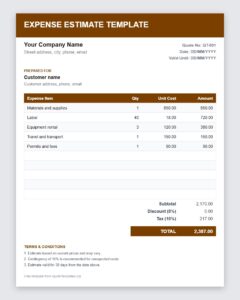
Download the file using the button below and open it in Microsoft Excel. Put your own details in the available blank spaces, replace the sample categories with your own, and review the totals. Save the file under a new name for each estimate, and keep the blank original as your master copy. Print it or save it as a PDF whenever you need to share it.
Download Expense Estimate Template

Download Free Expense Estimate Template (Excel)
Frequently Asked Questions About Expense Estimates
What is the difference between an expense estimate and a budget?
An estimate predicts what you expect to spend. A budget is a plan that sets limits on spending. Many people use the estimate as the starting point for the budget.
How often should I update my expense estimate?
Review it monthly, and whenever prices, plans or your income change significantly.
How much contingency should I add?
Five to fifteen percent is common. Use a higher percentage when the plan is new or the costs are uncertain.
Can I use this template for personal expenses?
Yes. Replace the business categories with items such as rent, groceries, transport and savings to plan your household spending.
What is an .xlt file?
It is an Excel template file. It opens in Microsoft Excel, and you should save your work under a new name so the original template stays clean.
Why is my actual spending different from the estimate?
Estimates are forecasts, so differences are normal. Compare the two, identify the causes and use the lessons to improve the next estimate.
